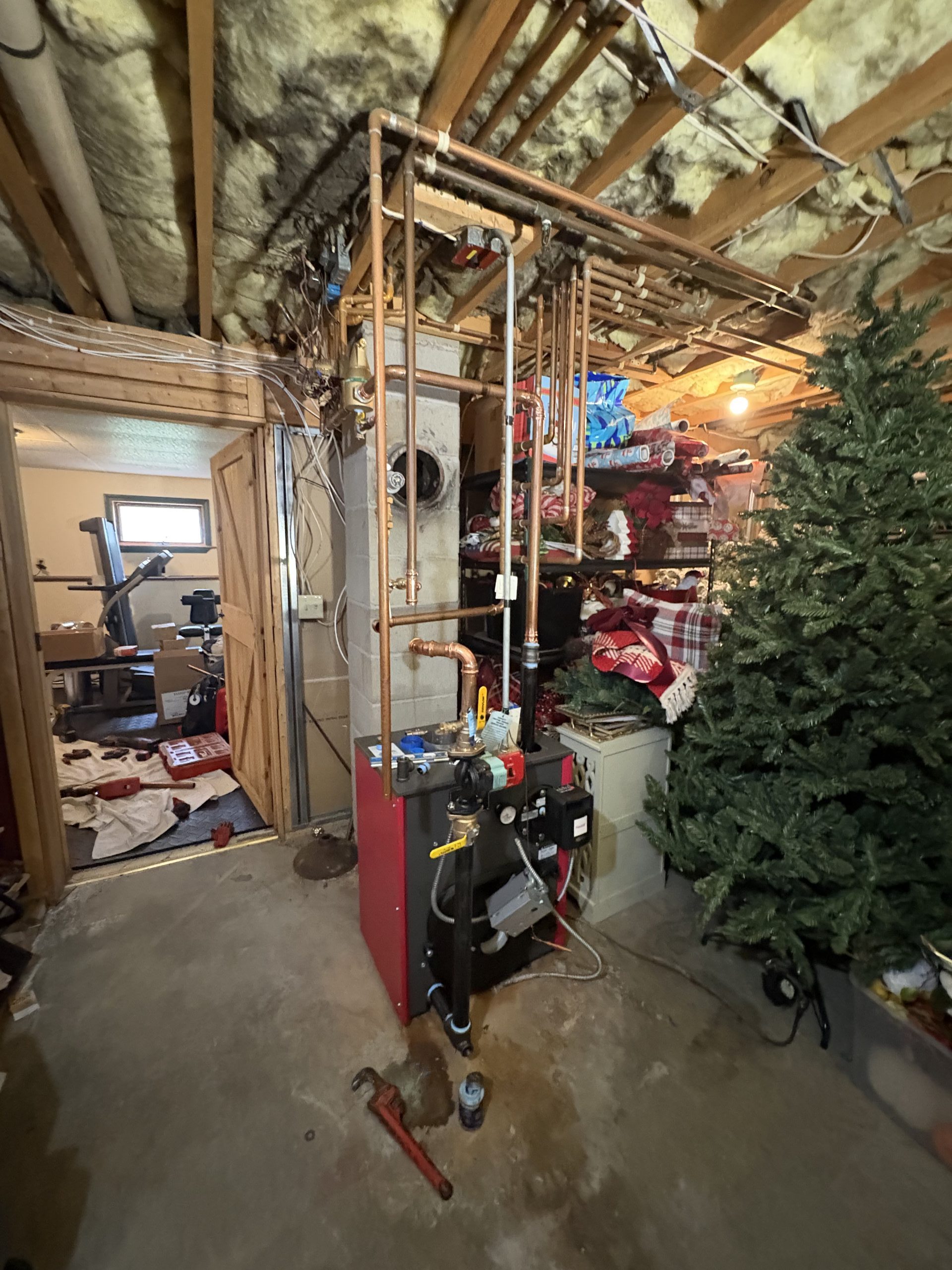
A boiler is heavy, expensive, hot, pressurized, and generally not something you want to figure out as you go. Plumbing already has consequences. Boiler work just raises the stakes. The first part was getting the boiler in the right spot and making sure it had solid support. A commercial boiler needs a proper base, usually a concrete housekeeping pad or a floor strong enough to hold its operating weight.
The anchoring mattered too. The unit had to be secured to the concrete so it would not shift or slide, or tip. This is one of those details that sounds dramatic until you remember the boiler is full of hot water, pressure, and fuel. This part made it very obvious as to why boilers have such specific rules. You need the right relief valves, piping, and clearances. The pressure relief valve is especially important because it gives the system a safe way to discharge if the pressure gets too high and you do not want a boiler improvising what do to in that scenario.
The discharge piping also had to be routed correctly, usually toward a floor drain or indirect waste point with the proper air gap. That part is not flashy, but it matters. A safety device only helps if it is installed in a way that actually works.
Next it was the connections. The boiler needed water makeup, fuel, and piping tied into the building system. The water makeup line had to be protected with backflow prevention so boiler water could not get into the potable water supply. Mystery boiler water in the drinking water is not a fun little surprise.
If the boiler was gas-fired, the gas connection had to match the unit’s requirements. Gas pressure matters. Pipe sizing matters. Shutoffs matter. This is not the place for vibes-based plumbing. The piping layout also had to make sense for service. Someone will have to maintain this thing later, and that person deserves access without needing the flexibility of a circus performer. Valves, unions, clearances, and service space all need to be taken into account for this reason.
I am still learning, so I am not going to pretend I understand every boiler standard from memory. But I do understand the main idea which is to support it correctly, pipe it safely, protect the water supply, and make sure the system can be serviced without making someone hate you.There is also the long-term side of it. Boilers need good water quality. If the water is not treated right, the inside can corrode or scale up over time. That means less efficiency, more problems, and eventually some poor maintenance person staring at it, hating their life.
Vibration and noise can matter too. Pumps and equipment can transfer vibration into the building, so isolation pads or supports help keep the system from sounding like it is trying to escape.
Before the job was done, the boiler had to be started and tested. Controls, safeties, valves, and shutdowns all needed to work. This is the part where you want boring results. Boring means it starts correctly. Boring means the safeties work. Boring means nobody is looking at the boiler with concern.
This project made me appreciate how much responsibility goes into mechanical work. A boiler is not just another box in a mechanical room. It is a system tied into water, fuel, pressure, heat, safety controls, and the people who will use the building every day. That is what I like about it. It is practical and a little intimidating. And if you mess it up, it will not be subtle.