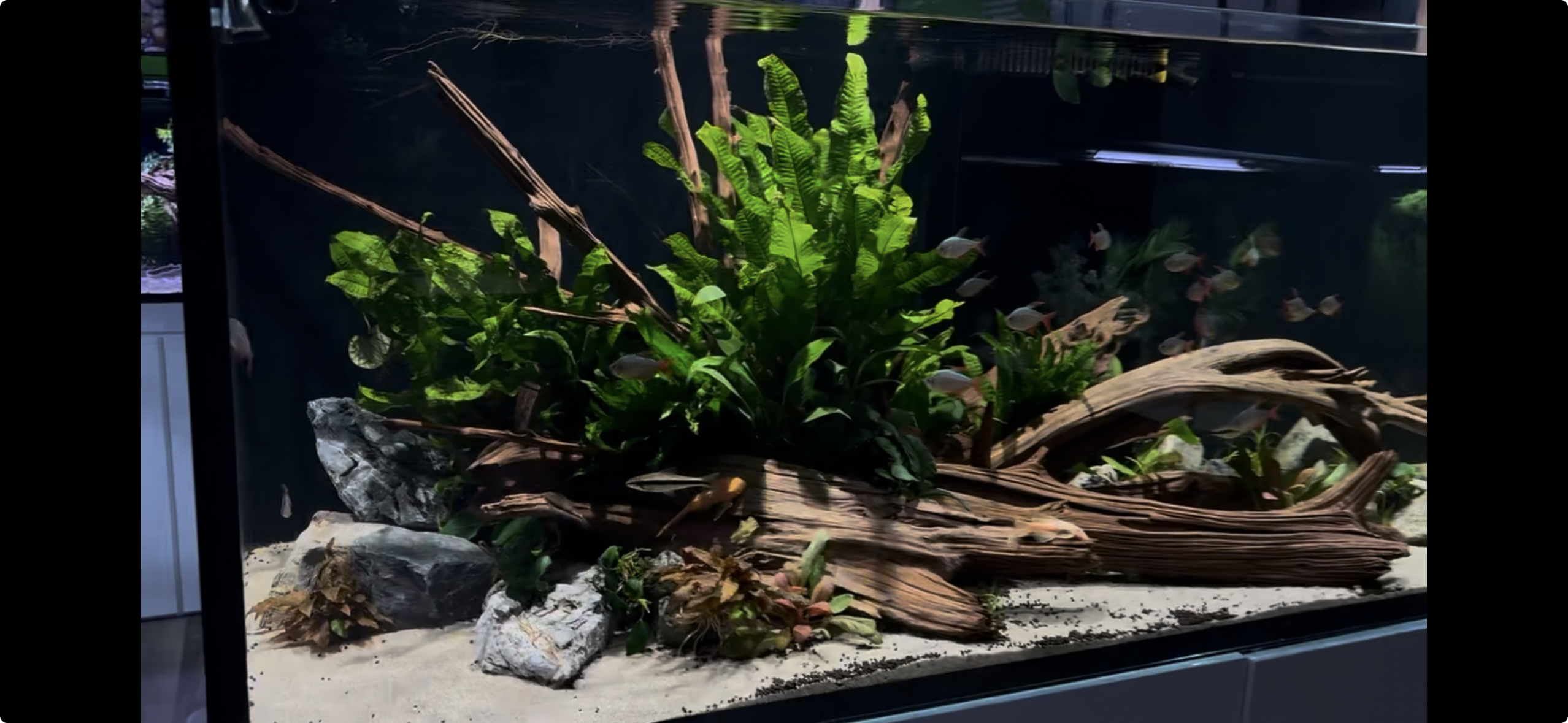
This is probably the best aquascape I have done so far, which is annoying because now I have proof that I am capable of being patient.
The goal was to make the tank feel like a small piece of nature instead of a glass box with plants shoved into it. I wanted it to look a little wild, like the wood and rocks landed there on their own. Of course, they did not. I moved them around repeatedly like a person slowly losing a fight with a tree branch.
The layout is built around a strong central structure. The large wood pieces create the main shape, while the rocks help anchor everything visually and physically. The plants fill in the spaces around the hardscape, softening the edges and making the tank feel more mature. Java fern and Anubias worked well here because they can attach to wood and rock instead of needing to be buried. That gave me more control over where the plants sat in the layout.
This project connects to engineering more than people might expect. Aquascaping is not just decorating a fish tank. It is a system. Water flow matters. Light matters. Plant placement matters. Fish behavior matters. Even the open swimming space has to be planned. If one part is off, the whole tank starts tattling on you through algae, stressed fish, or plants that look like they have given up.
I also had to think in layers. The wood creates structure. The rocks create weight and stability. The plants create depth. The sand creates contrast. The fish bring movement. All of those pieces have to work together without looking too forced, which is difficult because I was very much forcing it.
The most engineering related part was balancing function with appearance. The tank had to look natural, but it also had to support healthy fish and plant growth. The plants provide cover and help with water quality. The hardscape creates hiding places and territory. The open space gives the fish room to school. It is part design, part biology, part plumbing, and part quiet emotional breakdown.
This aquascape taught me a lot about systems thinking. You have to plan the structure, predict how things will grow, and make decisions that still work weeks or months later. It is slow problem solving. The kind where nothing happens quickly, and then one day it finally looks good and you pretend you were calm the whole time.