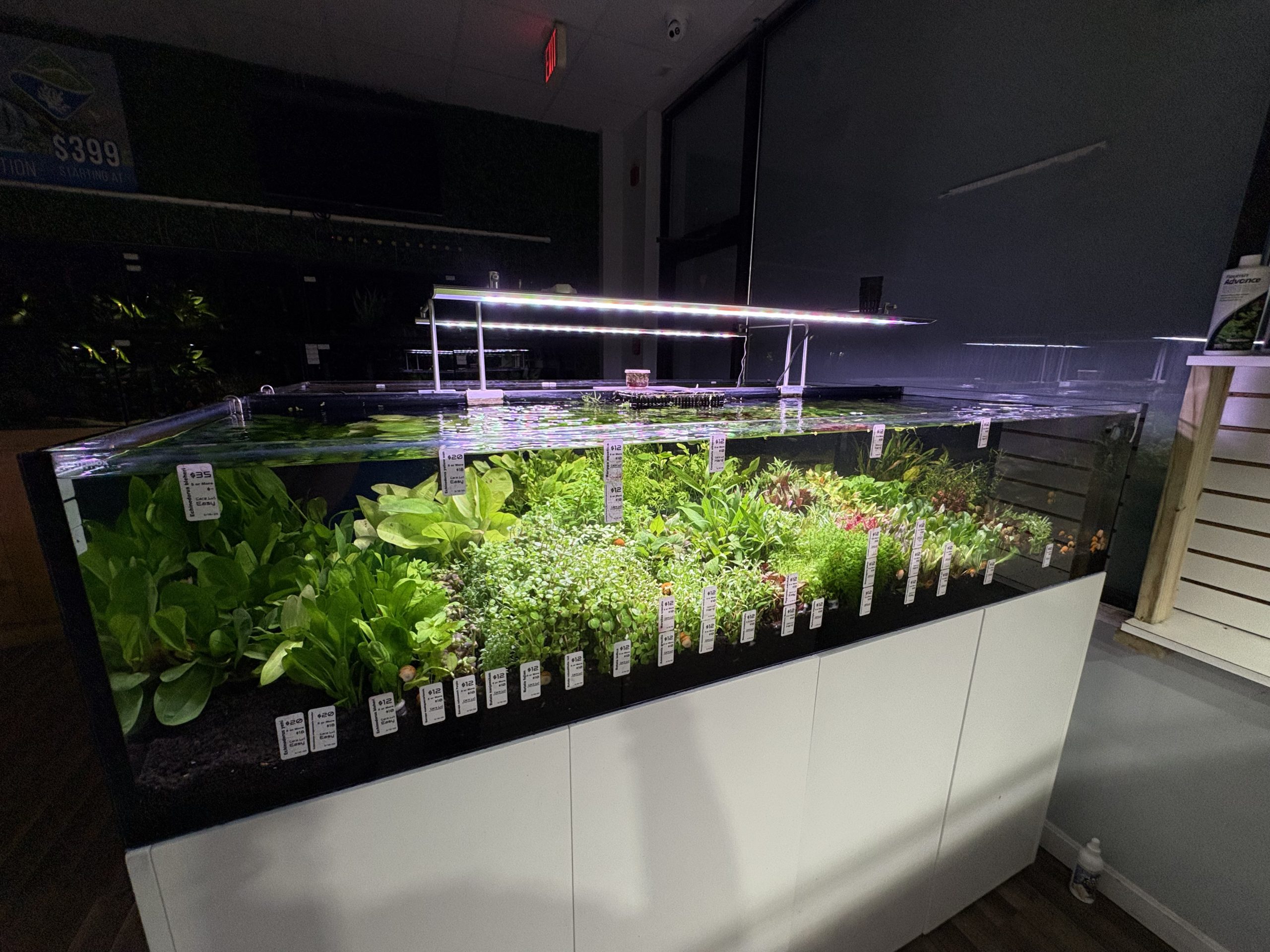
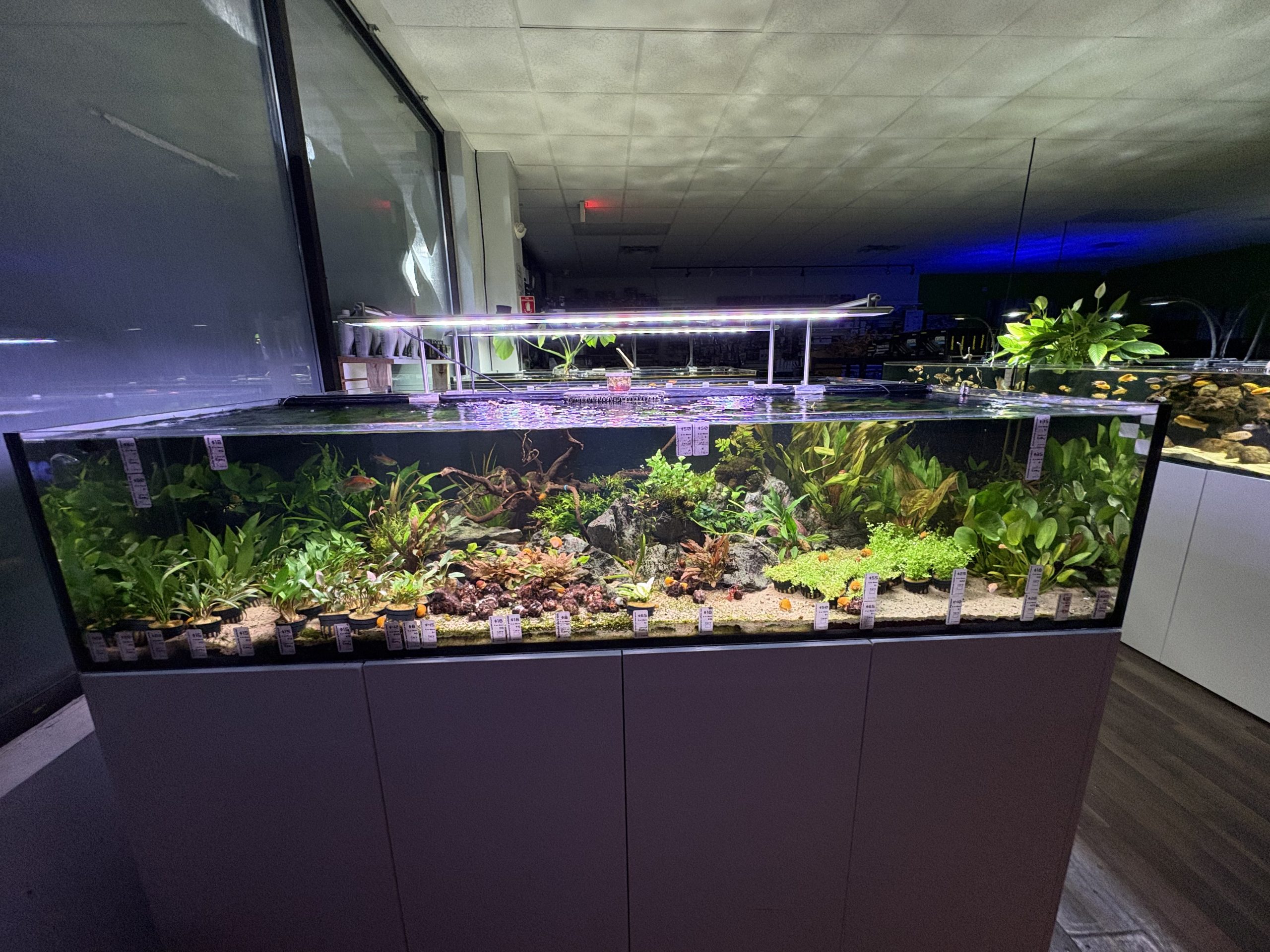
At the aquatic superstore I worked at, one of my jobs was helping handle plant shipments. This sounds peaceful until you realize plants can arrive looking like a beautiful underwater salad that now has to be sorted, checked, cleaned, labeled, and kept alive under retail lighting.
A shipment like this was more than just putting plants in a tank and hoping for the best. Each plant had to be checked for damage, weak leaves, melting, broken stems, pests, and signs that it was already giving up on life. Aquatic plants are dramatic like that. One minute they look fine, and the next they are turning transparent because apparently existence was too much.
The plants were kept in a long, shallow holding tank with strong lighting and clear labels. That setup made it easier for customers to browse, but it also helped keep the plants healthy. Light, water flow, spacing, and cleanliness all mattered. If the plants were packed too tightly or left in poor conditions, they could decay fast and make the whole system worse.
This connects to engineering because the display tank was basically a managed system. There were inputs, outputs, constraints, and failure points. The inputs were light, water movement, nutrients, temperature, and new plant stock. The outputs were plant health, customer visibility, water quality, and how much maintenance the system demanded. Very glamorous. Very wet.
There was also a biosecurity side to it. Plant shipments can bring in snails, eggs, algae, and other unwanted passengers. So part of the job was looking closely before anything moved into a customer tank or another store system. It is preventative thinking. Catch the problem early, or deal with the consequences later when everything is covered in mystery snails and regret.
The layout of the display also mattered. Bigger plants needed space. Smaller foreground plants had to stay visible. Stem plants needed enough light to avoid turning into sad green string. The goal was to organize the tank so the plants stayed healthy and customers could actually understand what they were looking at.
That is the engineering part. It was not just retail work. It was system management. I had to think about biology, layout, flow, lighting, maintenance, and risk control at the same time.
And like most aquarium work, the better the system worked, the less anyone noticed. The plants looked clean, the labels made sense, the water stayed clear, and customers got healthy stock. Which is probably the highest compliment a maintenance system can get. Nobody has to think about it because it is quietly doing its job.