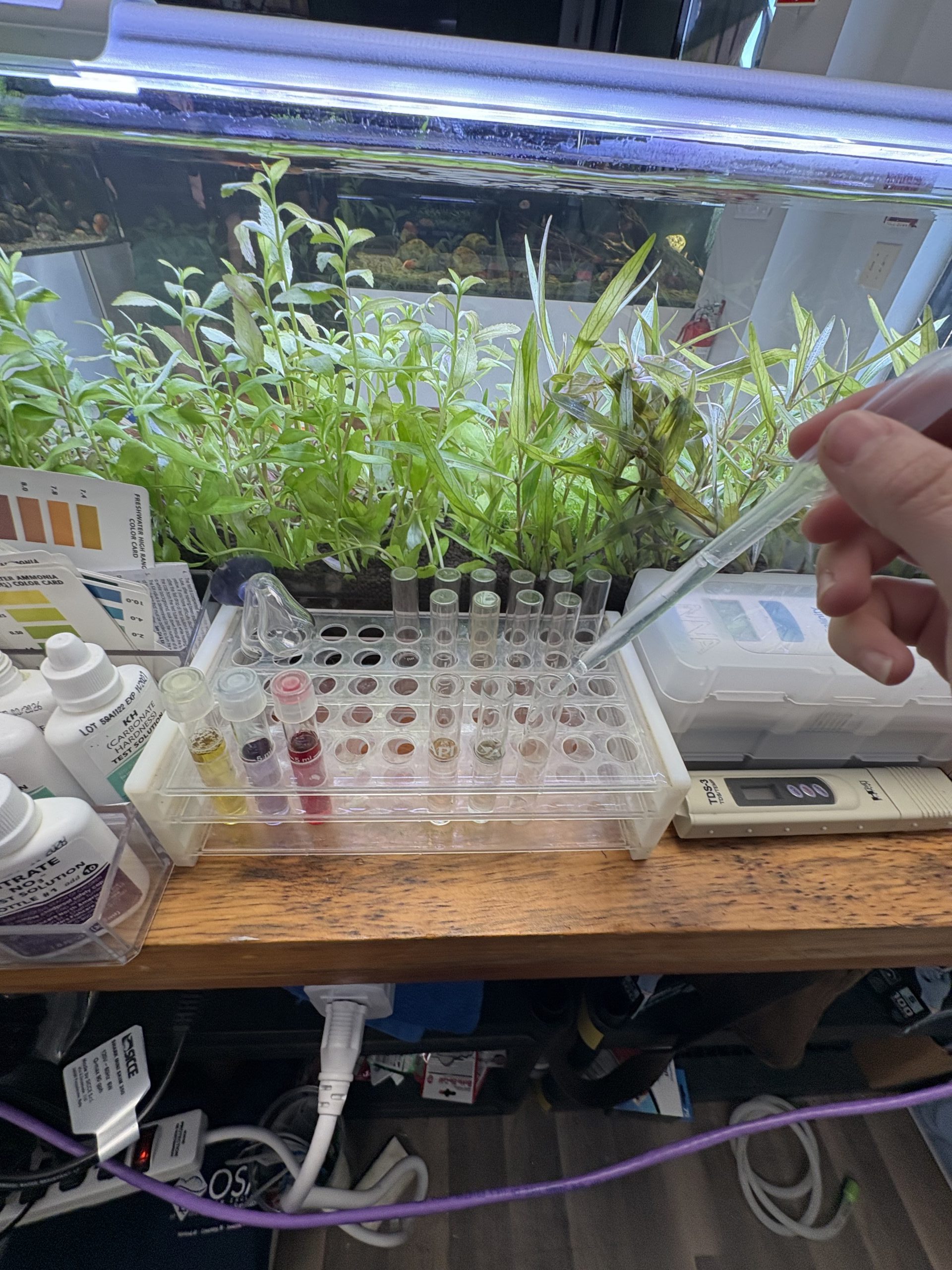
I test nitrates in my aquariums because guessing is a terrible maintenance plan. It feels easier in the moment, but the fish usually find a way to file a complaint.
Nitrate is part of the nitrogen cycle. Fish produce waste, waste turns into ammonia, bacteria convert ammonia into nitrite, and more bacteria convert nitrite into nitrate. Nitrate is less dangerous than ammonia or nitrite, but it still builds up over time. That is where testing comes in.
For this test, I used a liquid test kit and compared the water sample to the color chart. The process is simple, but also slightly annoying in the way all careful measurements are. You collect the sample, add the testing drops, shake the tube, wait, and then try to decide which shade of orange is ruining your day.
This connects to engineering because the tank is a closed system. There is no river carrying waste away. Everything that goes into the tank has to be processed somehow. The filter, bacteria, plants, fish load, feeding schedule, and water changes all work together. When nitrate levels rise, it means the system is producing more waste than it is removing.
That data helps me make better decisions. If nitrate is high, I might do a water change, reduce feeding, clean out decaying plant matter, or rethink the stocking level. If nitrate is very low in a planted tank, that can also tell me something. The plants may be using it up, or the tank may need more nutrients. Aquariums are fun because even the absence of a problem can become a different problem.
Testing turns the tank from a pretty glass box into something I can actually understand. It gives me feedback. Instead of reacting after the water gets cloudy or the fish start acting weird, I can catch problems earlier.
That is the engineering part. Measure the system, find the weak point, adjust the inputs, and watch the output. Then do it again because nature does not care that you had plans