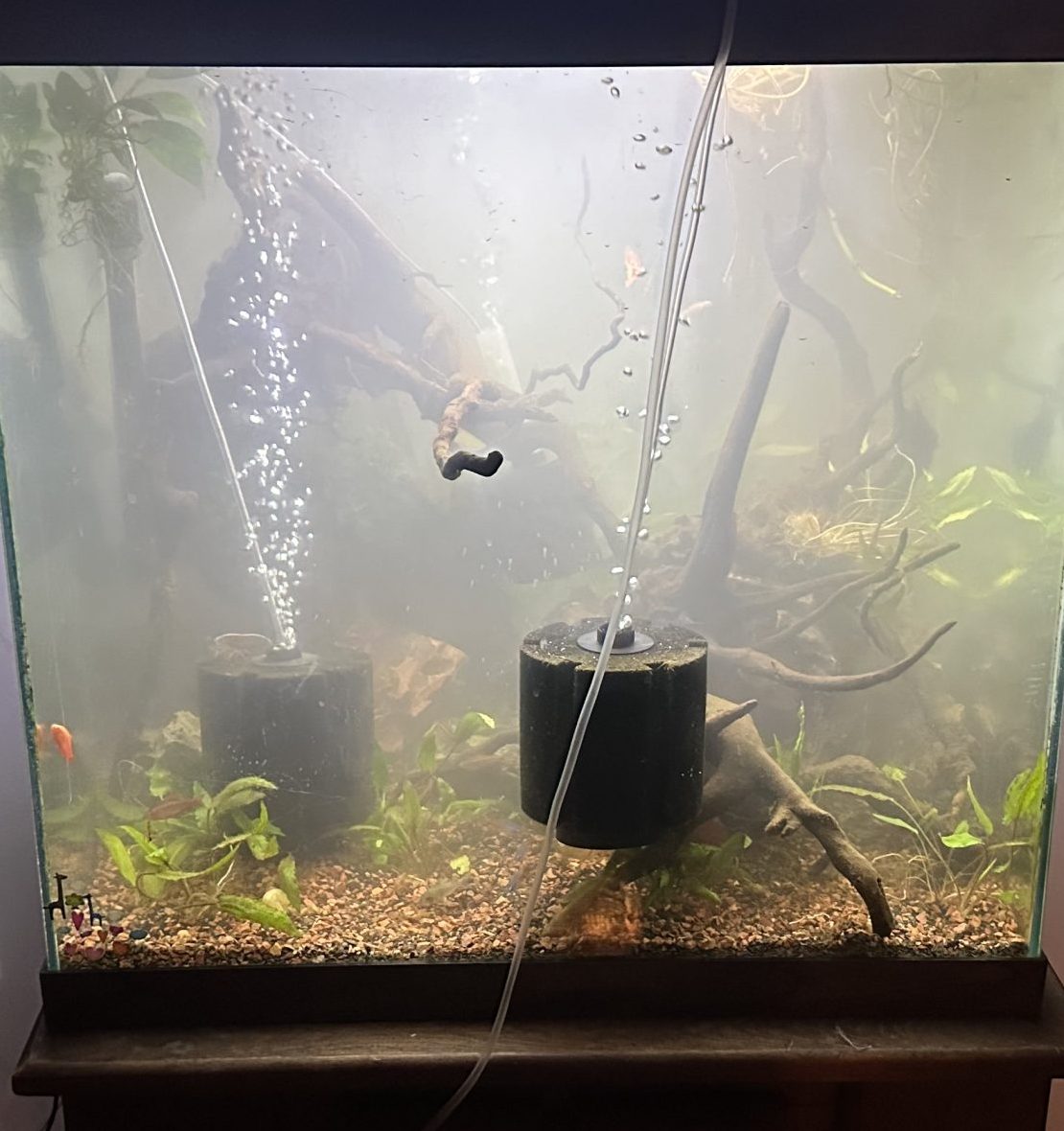
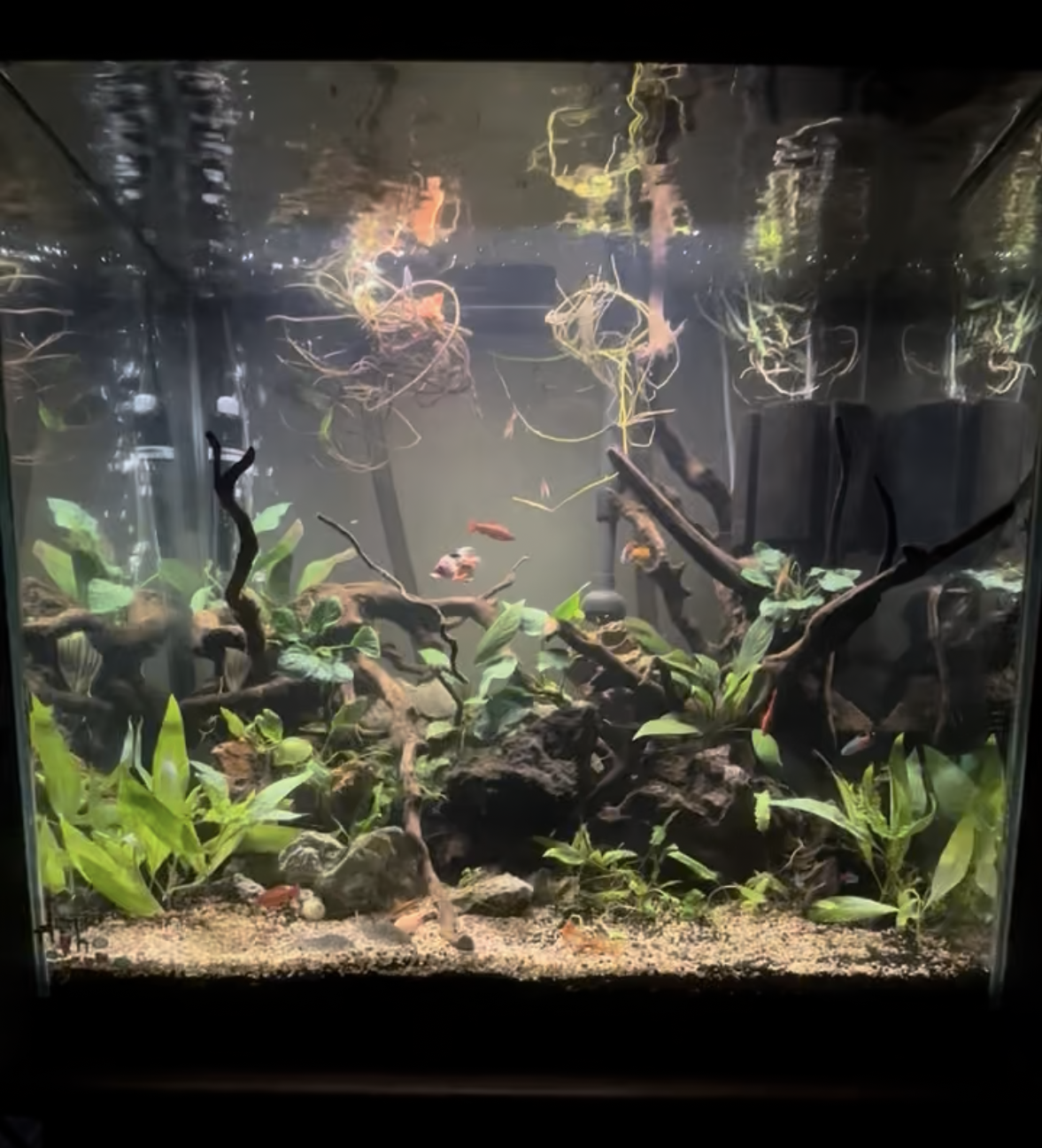
This cube tank went through a very honest ugly phase before it became something I actually liked.
At first, it was mostly functional. Cloudy water, visible sponge filters, random wood, and plants that looked like they had been placed by someone who was tired and slightly overconfident. Which is fair, because that person was me.
The early setup was less about looks and more about keeping the system alive. The sponge filters helped build up beneficial bacteria, which are what make the nitrogen cycle actually work. That bacteria turns fish waste into something less toxic. Very glamorous stuff. Tiny invisible organisms doing the job while I stare at the tank wondering why the water looks like soup.
Over time, the tank started to stabilize. The water cleared. The plants adjusted. The wood stopped looking like loose debris and started looking intentional. That is usually the point in aquascaping where you pretend the plan worked the whole time.
For the final layout, I leaned into the shape of the cube. A cube tank does not give you much horizontal space, so I used height instead. The wood creates a vertical structure, the plants fill in the lower and middle areas, and the floating roots add a wild, overgrown look near the surface. It makes the tank feel deeper than it really is, which is helpful when working with a small glass box that has no interest in making your life easier.
This project connects to engineering because it was all about building a working system in a limited space. I had to think about water flow, filtration, biological balance, plant growth, light, and how the fish would use the space. The tank had to look natural, but it also had to function. Otherwise it is just expensive wet furniture.
The biggest lesson was patience. You cannot force a tank to mature overnight. You can set up the structure, support the biology, adjust the layout, and wait. Then wait more. Then panic a little. Then wait again.
In the end, the cube tank became one of my favorite setups because it showed the full process. It started cloudy and awkward, then slowly turned into a small, balanced ecosystem. Which is annoying, because apparently slow improvement works.